
Bank reconciliation and bank statements: what is the difference?


A bank statement is a record of transactions held by a bank, while a bank reconciliation compares that record with a business’s accounting records. Understanding the difference helps UAE SMEs spot missing entries, investigate errors and get a more reliable view of available cash.
Bank statement vs bank reconciliation: the key difference
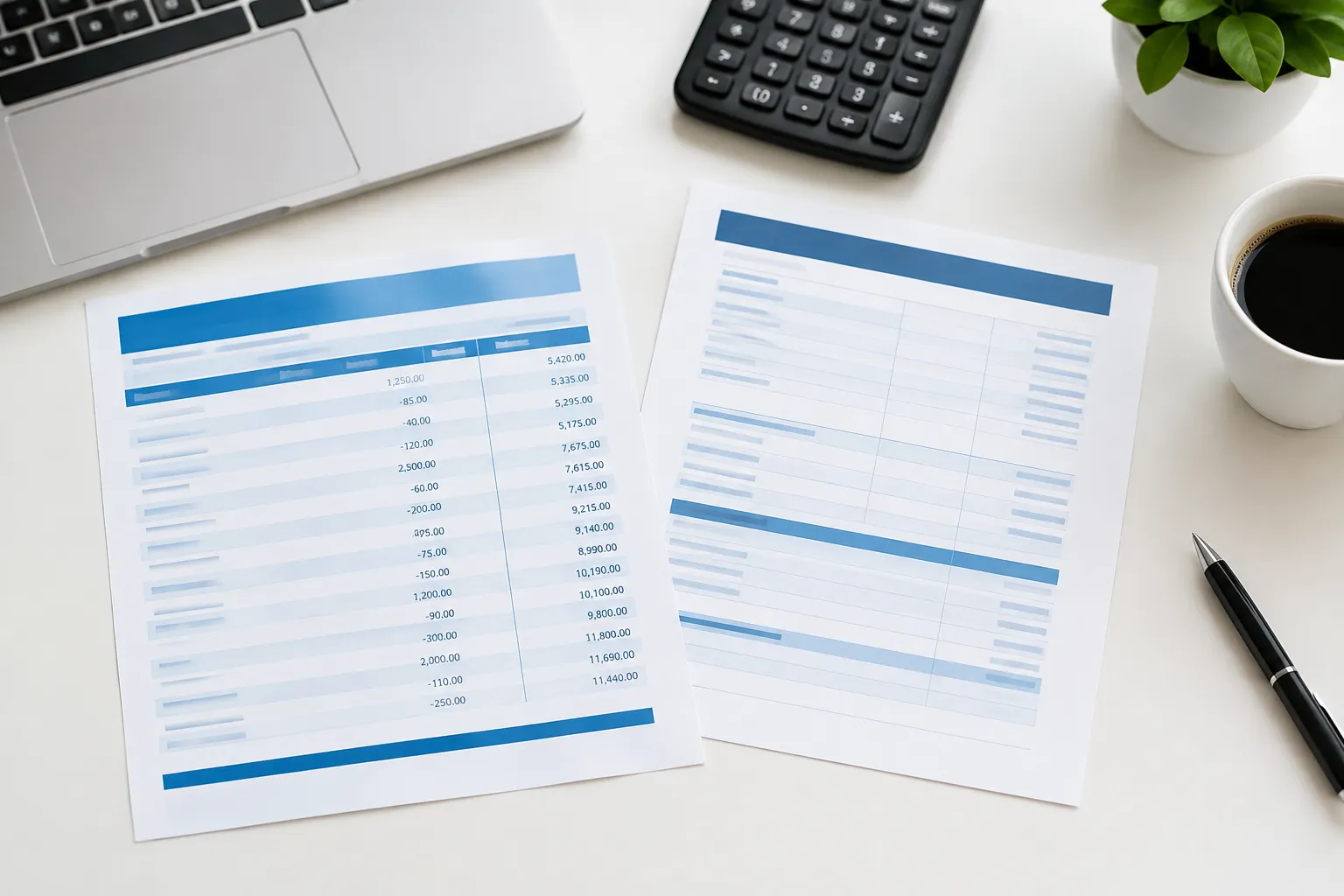
A bank statement shows activity recorded by the bank in an account over a period. A bank reconciliation is the process—or the document summarising that process—that compares the bank’s record with the business’s own books and explains any differences.
In short, a bank statement is an external record; a reconciliation is an internal check. The bank statement reports what has been processed through the account. The reconciliation checks whether the business has recorded those transactions correctly and whether timing differences explain any gap between balances.
When asking “what is bank statement?”, think of a report from the bank. When asking “what is bank reconciliation statement?”, think of a comparison that starts with the bank statement balance and the accounting-record balance, then identifies the adjustments or outstanding items needed to explain the difference.
For example, a business may record a supplier payment when it issues a transfer. If the payment has not yet appeared on the statement at the period-end, the two balances may differ temporarily. That difference needs to be listed and checked; it should not simply be treated as an error or ignored.
A clear reconciliation matters beyond bookkeeping. Reliable records can help an owner monitor cash and prepare financial information for external review. If the business is considering funding, reconciled records can also support the accuracy of financial documents for SME loans. A reconciliation does not guarantee a funding outcome, but it can help identify inconsistencies before documents are submitted.
What a bank statement shows—and what it leaves out
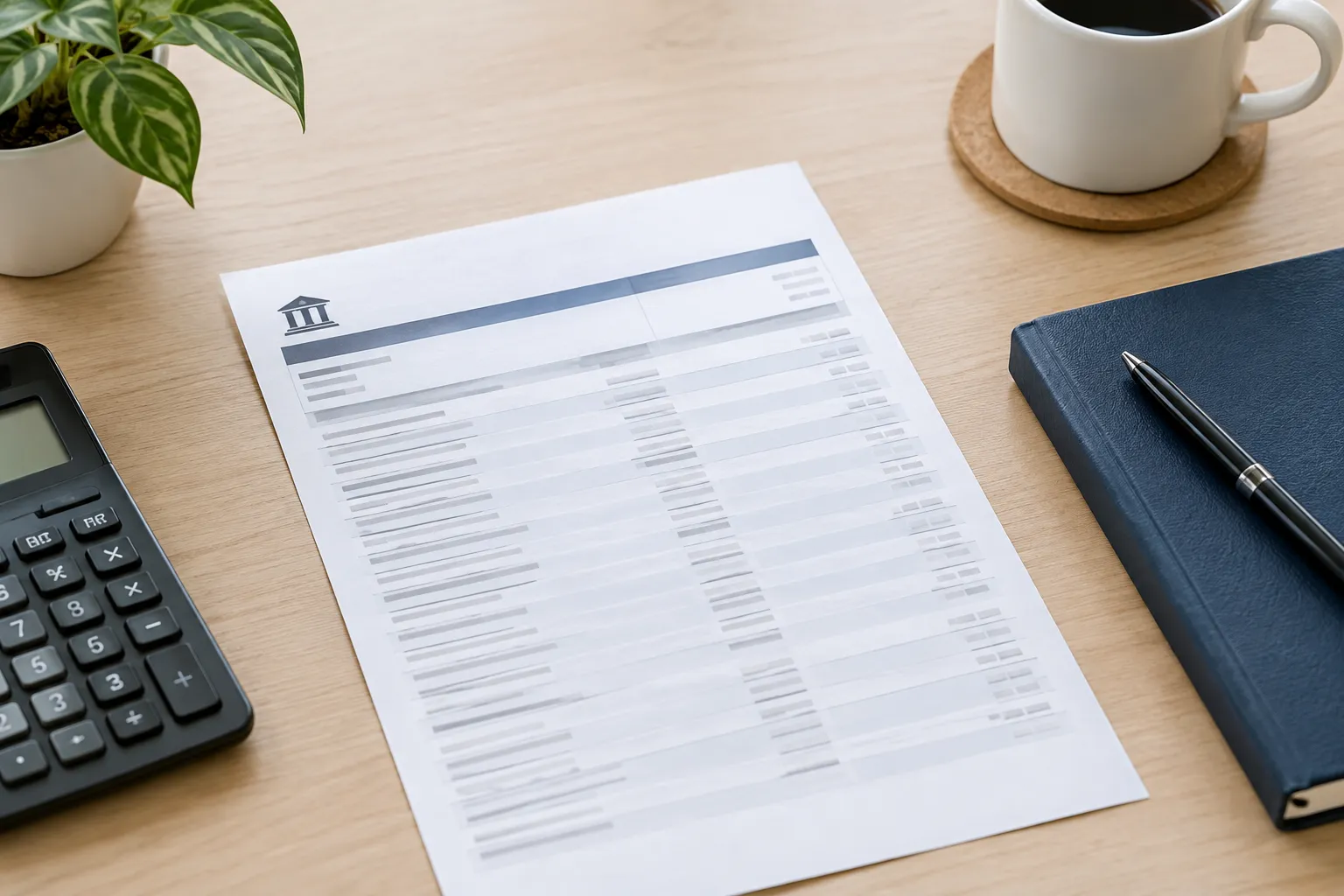
A bank statement commonly lists the account’s opening and closing balances and transactions processed during the statement period. Depending on the account and statement format, entries may include customer deposits, supplier payments, transfers, bank charges, interest and card transactions. The description and reference shown can help identify each item, although a bank’s wording may not match the name used in the business’s accounting system.
A bank statement example can make it easier to see how a transaction appears in the bank’s record and what details are available for matching it to the books.
A statement does not, by itself, show the complete position in the business’s accounting records. It may not include a payment or deposit entered in the books that the bank has not processed by the statement date. Nor does the statement tell the owner whether a transaction has been coded to the right account or whether a recorded amount is correct.
Consider a UAE SME that records a customer receipt on the final day of the month. If the bank processes it after the statement period closes, the receipt may be in the accounting records but absent from that statement. Conversely, the bank may have applied a service charge that the business has not yet entered in its books.
These timing differences are one reason the bank statement balance and the accounting balance may not match at a given date. The reconciliation explains the difference. If the gap cannot be explained by timing or a clearly identified missing entry, it needs investigation.
How to complete a bank reconciliation step by step

A bank reconciliation bank statement check works best as a repeatable process: collect the records, match the activity, investigate differences, enter omitted items and confirm the result. It can also provide a more dependable starting point for considering the cash flow statement, which presents cash movements in a different way.
Gather the statement and accounting records
Start with the statement for the period being closed, such as the relevant month-end statement, and the matching cash or bank account ledger from the accounting records. Check that both records cover the same account and period. If the business has several accounts, reconcile each separately.
Gather supporting records that can help identify transactions, such as payment confirmations, deposit records, invoices, receipts and transfer details. For a business with multiple payment channels, include the records needed to trace deposits and payments from those channels into the relevant account.
Before matching transactions, confirm the opening balance. It should agree with the prior period’s reconciled closing balance. If it does not, check whether the earlier reconciliation was changed or whether an entry has been added, removed or edited since the last close.
Match transactions and identify timing differences
Compare statement entries with the transactions in the business’s records. Work through deposits and payments systematically, matching by amount, date, counterparty or reference where available. Mark items that agree, and keep a list of those that do not.
A transaction recorded in the books but not yet shown on the statement may be an outstanding payment or a deposit still being processed. Check its date and supporting evidence. If it is recent and properly documented, it may be a timing difference. If it has remained outstanding longer than expected, investigate whether it was cancelled, duplicated, misdirected or recorded incorrectly.
A transaction on the statement but absent from the books may be a bank charge, interest entry, direct debit or another item not yet recorded. It could also be an unexpected transaction that requires follow-up. Do not assume that every unmatched item is routine.
The goal is not to force the two original balances to match. It is to explain legitimate timing differences and correct errors so that the adjusted balances agree.
Record missing entries and confirm adjusted balances
Enter valid statement items that are missing from the accounting records, such as bank fees or interest, using the business’s normal accounting process. Check the amount and description against the statement and supporting records before posting. If an entry is unfamiliar, investigate it rather than assigning it to a convenient account without evidence.
Then prepare the reconciliation by listing the bank statement balance, the relevant outstanding items and the book balance, along with any required adjustments. The exact layout can vary, but each difference should have an explanation and supporting detail.
Finally, check that the adjusted balances agree. If they do not, return to the unmatched items and recheck amounts, dates, signs, account selection and calculations. A balance forced through an unexplained adjustment is not a properly resolved reconciliation.
Reviewing reconciliations and resolving differences
Preparation is only part of the control. Reviewing the reconciliation helps a UAE SME catch errors before closing the period and makes it easier to follow up on unusual transactions. The review should consider both whether the calculation balances and whether each listed difference is genuine, supported and appropriately handled.
A useful review asks: Are all statement entries accounted for? Are the outstanding items still valid? Have missing charges or receipts been entered? Does the opening balance agree with the prior close? Can someone unfamiliar with the preparation trace the figures to their evidence?
Check fees, transfers and missing entries
Review statement charges and other bank-initiated entries against the accounting records. Check that each fee or interest item has been recorded once, in the correct amount and period. If a charge is unclear, refer to the transaction description or seek clarification through the business’s usual bank contact or account service process.
Transfers between the business’s own accounts need particular care. A transfer should be reflected in both relevant account records. If it appears in one account but not the other, check whether processing dates explain the difference. Also look for duplicate entries, which can arise if a transfer is recorded manually and imported from a bank feed.
For SMEs receiving payments from customers or other organisations, trace deposits to the relevant invoices or receipt records where practical. If an expected receipt is missing from the statement, check its status and date rather than assuming it has cleared. Invoices and supporting payment information can help distinguish a delayed receipt from an incorrectly recorded one.
Investigate duplicates, errors and old outstanding items
When an item does not match, trace it back to source evidence: the statement, payment confirmation, invoice, receipt or ledger entry. Check whether the amount was entered incorrectly, posted to the wrong account, recorded twice or assigned to the wrong period. Correct the underlying record through the business’s normal process and retain a note of what changed.
Older outstanding items deserve a closer look. A payment that remains uncleared may have been cancelled or replaced; a deposit may have been delayed or recorded inaccurately. Confirm the item’s status before removing or changing it. If a difference repeats from one period to another, record the follow-up and escalate it to the person responsible for the accounts or financial controls.
If a transaction appears unauthorised or cannot be explained, separate that issue from ordinary timing differences and follow the business’s established process for contacting the bank and protecting account access. A reconciliation can flag a concern, but it cannot determine the cause without further checking.
Document review and keep a clear audit trail
Keep the statement, reconciliation, supporting evidence and notes on corrections together in an organised record. Record who prepared the reconciliation, who reviewed it and when. Note any unresolved differences, the steps taken to investigate them and the person responsible for follow-up.
For a small business with limited staff, preparation and review may not always be handled by different people. If one person performs both roles, a documented secondary check—such as an owner’s review of unusual items and supporting evidence—can still make the process clearer.
A consistent audit trail helps the business explain how it reached the closing balance and what it did about discrepancies. It also makes later periods easier to review because unresolved items are visible rather than silently carried forward.
Bank reconciliation FAQs
What is bank statement and bank reconciliation?
A bank statement is the bank’s record of account activity. Bank reconciliation compares that record with the business’s accounting records and explains differences such as timing items, missing entries or errors.
What are the 7 steps to bank reconciliation?
Gather the statement and ledger; confirm the opening balance; match transactions; list timing differences; investigate unmatched items; record valid missing entries; and verify that the adjusted balances agree.
How do you write a bank reconciliation statement?
Show the statement balance and book balance, list the differences and adjustments that explain them, and check that the adjusted balances agree. Keep evidence and explanations for each item.
What is the difference between a general ledger and a subsidiary ledger?
A general ledger summarises accounts used in the business’s financial records. A subsidiary ledger provides detailed transactions for a specific area, such as individual customer or supplier accounts.
How do you reconcile a general ledger account?
Compare the account balance with relevant supporting records, trace differences to individual entries, correct errors through the normal accounting process and document how the final balance is supported.
How often should a small business reconcile its bank accounts?
Many small businesses reconcile each account monthly as part of the close. Businesses with frequent transactions or tighter cash monitoring needs may choose to check activity more often.
What should you do if a bank reconciliation does not balance?
Recheck the period, opening balance, transaction matches, calculations and missing entries. Do not use an unexplained adjustment to force agreement; investigate the difference and document any follow-up.
Can accounting software automate bank reconciliation?
Accounting software may help match imported bank transactions to recorded entries, but matches and exceptions still need review. Check that entries are accurate, complete and supported before finalising the reconciliation.
Make reconciliations part of the monthly close
A regular bank reconciliation gives an SME a clearer view of recorded cash and outstanding transactions. Set a recurring close task, assign responsibility for preparation and review, and make sure unresolved items have an owner and a follow-up date.
Use the completed reconciliation alongside other financial records when reviewing upcoming payments, expected receipts and cash needs. It is not a forecast on its own, and it does not replace a cash flow statement. But when kept current and supported by evidence, it gives the business a more reliable basis for understanding what has cleared, what remains outstanding and what needs attention.
SYG International advises on, structures and arranges debt and equity funding for SMEs and mid-market companies across the UAE, working through banks, fintechs, private lenders and investors. SYG does not lend.
Want to know which funding option fits your business? Talk to SYG International.
Discuss your fundingSYG International advises on, structures and arranges funding. We do not lend. Final decisions, pricing and terms rest with each funding institution. This article is general information, not financial advice.